

Welcome back to the channel so yes today It is practice time last week we talked About the theory of the bishamel if you Haven't seen the video link in the Description and remember we said why it Was a mother sauce how does it fit in The in the wider context of French Cooking but most important we ended up Saying there is three main variation of Bashame based on its thickness so what Are we going to do here in the practice We talked about mother sauce we're going To make the base bashame as a mother Sauce the fin version and with that We're going to create other sources that Are going to become the derivative aka The daughter source some mother source Give birth to daughter sources remember If you haven't seen the video watch it Again so get ready plenty of work to do And plenty of little sources to discover Let's go let's jump right in so from What we've learned last week on the last Video we said the bashamel is a you know A base preparation rather than just a Sauce it's a mother sauce that is based On three key Ingredients milk flour and butter out of These three ingredients we we're going To have two components we've got the R Which is make with the flour and butter Mixed and cooked together that's going To create a thickening agent and we've Got our base liquid which is
Milk golden rule you never ever change a Mother sauce it's been around for Decades if not hundreds of years every Shape in the world is obeying to the Rules the composition of the bishamel is Milk flour and butter i know you can be Passionate you just learn a few Techniques you want to start to change Things Don't you can change the sauce you Create afterwards but the base you don't Change it that's it and now let's go on The stove and we're going to start by Making the ru based on what we've seen Last week a liter of milk so first step Here we're going to be making the r so I've got my butter so remember 40 g of Butter 40 g of flour this plain flour And we use a rather low to medium heat Maximum and we start by melting the Butter as soon as the butter is Melted we add all of the flour at once We reduce our heat i'm going to gently Mix everything together until we get a Paste there we are when you have your Paste we now need to cook the R there's Three different colors of R white blonde And brown for the bashamel base Typically you're going to go white or Blonde if you wonder about the timing in Cery schools there are follow about 3 to Four minutes max for a white r four to 6 Minutes for blondes and six to eight for A brown we're not going to go into the
Brown and neither the blonde so here 4 Minutes is even pushing it I would say 3 Minutes I'm going to put a timer on and That's all we're going to cook that for The time is up immediately I'm turning The heat off and I'm taking my pan off The Heat I'm going to put it on the side of The stove and I'm going to leave that Root to cool down totally if you want to Accelerate the process you can plunge The bottom of the pan in a tray with Cold water but for home cooking it's not Really necessary so I'm just going to Put this on the side of the sauce where It's cold and we're going to make the Milk the milk is very important here We're using one liter of full cream milk Or whole milk oh you see there's even Cream in there i'm going to put Everything in here why is it important Because you can flavor your milk with Anything that you want the taste you Have in your milk you're gonna start to Define the taste of your bishame so Without going too extremes here we're Gonna go with the basics remember you Can put anything if you want to put Mushroom pieces of ve whatever so we're Having few pieces of onion one bay leaf I'm going to put some time maybe not That much because thyme can be a little Bit strong sometime here I've got my Salt and some white pepper the purists
Will always tell you that a bishamel Without nutmeg is not a bashame it is Not always used in the modern world Nowadays but I'm going to add a grating Of freshly grated nutmegs in it i've got All my flavoring ingredients i'm not Going to rush things i'm going to use a Medium heat because we have time for the R to to cool okay we don't want to burn The Milk whisk everything Together and that's going to be our base My milk starts to smoke gently there's a Few fumes we don't want to boil it i'm Going to turn my heat off it is warm Enough now let's look at the two Components we have now so there we have It remember what we said the bashamel is Made out of three ingredients milk Butter and flour and out of these we Create two components here the flour and Butter has now been changed into a root Which is the thickening agent and the Milk on its own has been flavored so we Got a flavored milk and a r and now to Create the bishamel we're just going to Combine both of these things together to Proceed make sure the heat is off you Don't want to warm up your R your is at Room temperature it's fine we're going To be using a seieve and because we Don't want all the aromatics to fall Into the bashamel and we start with a Little bit of warm milk so that we can
Dilute easily the r that sits in the pan Here so we take a whisk and we can scrub The bottom we can make sure we mix Everything at the bottom here so we Capture all that R and start to blend it With the milk if you don't do this You're going to have clumps of R if There's too much milk that's going to be Sitting around everywhere so make sure You really work well the base Preparation get all the stuff on the Side there before we add the rest of the Milk so you see if I move my pan Slightly you can see there's no room at The bottom okay when that first step is Done we can add the rest of the milk oh We capture everything perfect so once we Here we can turn it on Again we favor a medium heat we don't Want to go too Fast give a little whisk and I'm going To use my spoon my spoon had some r left On the I'm going to use this and now We're going to bring this to a boil but Gently on medium heat you don't want to Uh use too high heat you're going to Burn the bottom of your pan and the you Know the sauce is going to start to Crust at the bottom you don't want that So always go easy when make the bishame We are almost here it's almost boiling And look at what happened the bashame Thickens and you get something that's Got a really nice consistency and that
Is the version of the thin bashame that We're going to be using as a base for Sauce so I'm going to continue to cook This on the lowest of heat for another 3 Minutes then turn the heat off and we Are done we've got hammad sauce this is The base bashamel the thin Version i'm all done i've turned the Heat off the bashamel is here this is The thin version and we are now going to Be able to use this to create other Sauces now if you want to adjust the Seasoning here you can a tiny bit of Salt if it's really lacking a bit of Pepper but remember that we're going to Have to use this as a base so you rather Have something a bit more neutral and Then season after when we're making the Other sauce than anything else so this To recap is the mother sauce it is the Base upon which we're going to build and Create other sauces and that's going to Be now for the second part of the video We're going to be creating three simple Sauces i'm going to take you through the Classic subies we're going to see a home Version of the Aurora sauce so the aura Sauce based on tomato and to finish a Water crest version the sauce we're Going to be making now are called of Course the bashamel derivative or in the Old days it was called the daughter Sauces so the bashame is the mother Sauce and now we're making daughter
Sauces or bishame derivative we're going To be making mainly well let's say four Sauces the very first one which is the Foundation the most simple sauce that You can make with the fin bashame is a Sauce creme just using cream more on That later after that the saucer based On tomato this is going to be with a Beautiful homemade patata that we made Recently it's all flavored with herbs And wine and stuff we're going to have a Water crest version as well as the Subies which is Simply on that are sauteed in butter and Then mixed with the bame all these Version are simplified version that are Part of the cuisine Dominating so they're very easy to do And they all use the bashame as a base Now if you want to learn more about Sources I will direct you to our source Course link in the video description Where we're going in depth to Everything French sources uh that covers Anything from the stocks um you know the Basic demiglass the zu the fume etc and We're covering more than 30 classic Sauces all across it is simply the most Comprehensive and complete source course There is online that is dedicated to French cooking so if you're keen on that Check the course page to see all the Content but for now let's start and go On the stove to make these dollar sauces
So let's begin bashamel derivative Number one the sauce creme or what it is It's your fin bashamel with an addition Of cream the measurement for the real Sauce creme are going to be given on the Recipe card they're typically 40% of Cream for 60% of bashameal here I'm Going to put a little bit less because Most of the other sauces contains cream If you want to have a better bashameal Even when you make a lasagna or anything Adding some cream like I will do Now adds a lot of nice texture condenses The taste it's much more smooth and Silky so now all what we're going to do Is to mix and reduce this for 5 minutes So here we are we are done believe it or Not looks the same but this is an Official bashamel derivative the very First one the sauce creme the reason I'm Showing you this is that because first All the other sauce needs cream in there And in the world of chef adding cream in A bashameal is now becoming a new Standard to just get that better Restaurant quality in your bashame that Makes all the difference all right so We've got this now this is going to be Really our ultimate base now we're going To start the other derivative starting With a very simple one which is called The source aura and now for the next Sauce the source or actually means aura It's when the sun rises you know you got
This kind of pink sky and the idea is to Have a kind of a pinkish color this is a Great sauce for kids by the way I'm Going to turn my left and I'm using a Large pan with a small quantity of sauce Because otherwise if you have a small Pan you won't see anything into the pan So I just want to see you know make sure That you can see what's going on so all What it is it's a bashamel a fin thin Bashameal in the world of home cooking And let me reiterate that once more with Some cream so it's a base of sauce creme With a few addition of good Quality pata about two to three Tablespoon okay so Typically you're going to see why is it Called aura because we're going to Get that color which is a kind of a Pinkish you see that color kind of a Pinkish hoop and I'm just going to warm It up and you can reduce it a little bit And that's it again when we talk about Derivatives it doesn't have to be Complex okay we're done i've just bring This to the simmer and we've got our Sauce that is ready as I said perfect For kids for pastas any macaroni Spaghetti if you have young children Sliced ham on top uh and it will work Honestly it's a nice sweet sauce it's Not complex very easy to make but it is A sauce if you want to pour this even Over cauliflower or vegetables or
Anything i find this beautiful i know It's mostly for kids but adults love it And this this is the sauce now as you Can see derivative can be simple next on The line is the subis a bit more not Complicated but there's more steps so we Take a pan and we need to cook some Onion additu on very low heat in butter For 125 gram of onions and we can use up To 40 to 50 grams of butter so first We're going to take a pan melt the Butter and then we'll put the onions in As soon as the butter is melted we're Going to reduce the heat to very very Low and we're going to put my onions in I am using here which is the right way Of typically doing the subies is to use White onions they're not brown onions And they're much much Softer like in taste you know they're Not as sharp or they're not as bitter or Anything like they're a bit sweet which Is very good when you make that sauce on Here let me raise the heat a bit and Then we're going to have to really cook Them very very slowly no coloration no Caramelization we're really softening Them until we can puree them with a Stick blender with our bashame that's All what it's going to be now typically What we will do make sure it's the Lowest setting that we have and we're Going to put a piece of uh parchment you Can put just a lid over the pan but
Typically we're going to add to we call That cooking Alu up you put a bit of parchment paper On it i could have make a circle but It's homestyle cooking okay I'm going to Leave this in there and a good 10 Minutes and keep an eye on it to make Sure there's no coloration whatsoever Now after 10 minutes you can look at Your onions and if they're still tender It depends on your on your pan and Everything like this keep them going 15 Minutes up to 20 minutes maximum but you Want to make sure you see how they're Very soft like that that's what you want I think I'm almost done there i'm going To give it a few more minutes to really Cook them what you don't want is to have Any kind of crunch in these onions at All they to be absolutely cooked Okay I think my onions are ready for the Seasoning some people put sugar if the Onions are a little bit too sharp you Can add a touch of salt but usually the Seasoning I like to correct the Seasoning afterwards when um we've got The whole sauce made so a little bit of Salt i'm going to remove the excess of Butter and we're going to pour this in a Bit of bashame now for the final step What we're going to do we're going to Mix our base bashame with the onion so For 250 milliliters roughly of bashame Which is about one cup you use about
Half uh the amount of onion okay so one Portion of bashameal half portion of Onions i've got 250 mil here i've got About 125 g of onions that I'm going to Put in here mix them in and what we're Doing is flavoring a bishame with onion Saute in butter see plenty of onion but We can't leave it like this so wiggy at Home we're going to be using a stick Blender and we're going to process the Whole Lot and I think we're done and we're Done so the last step consists as Filtering you can pass this through a Sie if you want to have something super Clean but if you at home or what you Need to do is to take a spoon you're Going to be tasting always taste your Sauce and voila it's beautiful oh you Got now that white onion is great Because a bit sweet you got that Sweetness that international butter in The background and it's not too salty You don't want it too salty and if you Want you can thicken that Sauce much more than than this typically The subies in French cooking is used Quite thick more as a garnish in the Sauce but in the modern world a lot of Chef are now using the subies like this To pour over you know a piece of chicken For instance a piece of salmon or Anything like this and I think it works Really well in that consistency that's
Why I like to make it with the final but That's our third derivative now let's Finish with the last one which going to Be the water crest sauce and now for our Last example another easy sauce easy Derivative that you can make is a water Crest version now we're using water Crest but you can use other leaves that Have got lots of chlorophyil so spinach Water crest sorell leaves or even Parsley yes parsley is used to make Another sauce it's called the sauce peri Which is the parsley sauce used in French cooking for about two you know One cup of 300 milllers of uh of bashame You can use one and a half to two cup of Leaves because we're going to have to Blanch them in boiling water okay and Then they reduce to nothing as you will Discover how do you prepare water crest It is a bit of an annoying thing because It always comes in branch it's very Fragile it needs to be always moist Always in contact with water otherwise It's going to it's going to you know Totally fall apart and fade away but you Need to pluck Uh the end bits you don't have to be too Precise okay so you don't want that for This you keep the leaves like that That's about it and now blenching Blanching very simple got water i'm Going to Add a bit of salt and wait for the water
To come to the boil my water is boiling I'm going to try to carefully plunge my Leaves and here is just really a matter Of mere Seconds so really I'm plunching this in There and about Like 20 seconds or something like this And I'm going to drain the water out and Back into a sie so you don't really want To cook the water crest it's going to be Horrible you just want to blench it Let's zoom a bit more and you see the Boiling is coming back pretty much here I'm done like this we're going to keep The freshness of the water crest so Immediately off and I'm going to drain The water and this into a sie there we Have it so I've put a bit of cold water To stop the cooking imagine two cups of Water crest gives You that Much and that's even there's still some Water in there so imagine I'm making a Bowl that's two cup of water crest now Typically you put this in a food Processor or anything like this to prep Puree and then put this into your sauce Whatever sauce you use but here again We're going to be naughty we're going to Use the the home cooking technique with The stick blender as before all right so Same process as before i've got about 300 mil of my sauce is the last batch i Remember you use the same sauce at base
Sauce that final to make everything Typically we have to prep puree but here I'm going to take some of my water crest To start with maybe half of it and then Same as before stick blender and off we Go Let's have a look with one cup of water Crest so as you can see that kind of Almost minty color and when I'm mixing The water crescent sauce and we keep the Freshness we don't have something that Is horrible or cooked green like cooked Spinach it's like nice and fresh almost Emoscify for it i'm going to add the Rest to show you how green it gets So let's put the rest of the water crest And one Last bit of Processing there we go second batch so This is how it looks like you see There's a bit more green in There very very nice and I like that Kind of foamy kind of consistency and This sauce is actually a sauce we've Used in one of the dish from our latest Course uh called the chef's plate where I've created something called the Cauliflower royale i'll put a picture on The screen here which is inspired by a Scopier which is all vegetarian and you Have that water crest sauce it's made a Bit differently just with cream but you Can use that bashame version at home if You want which is absolutely beautiful
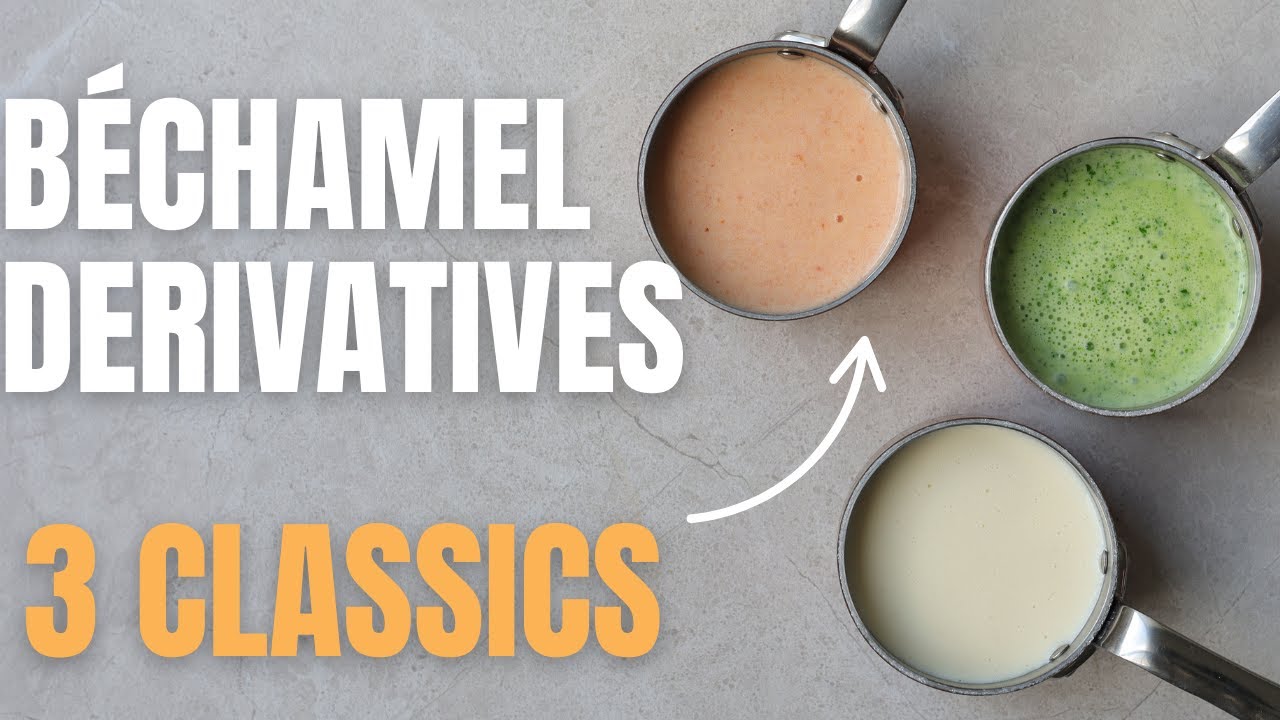
Remember that can work with all kinds of Green leaves all right but that's it Let's do a recap we've made four Derivative imagine that just with the One thin Bashame so I hope that by now things uh Are making more sense if you've watched The video on the theory now having the Practice should really give you the Whole picture so the whole thing to Understand here so the importance of the Bashame sauce as a mother sauce i've Used the same base with a little bit of Cream to make the sauce creme which is a Given so I'm not showing you this on the Picture and from there you can start to Very simply create your daughter sauces Your derivative so the subie is on the Left this is the white onion super Versatile sauce it works with chicken With eggs with vegetables even salmon Pan fried salmon beautiful poured over It's nice and sweet it's such a classic Sauce the middle one great for kids as I Said plain like this with tomato sauce With the bashame with pasta all kinds of Pasta it will work and if you're an Adult you can throw in some petta some Bacon some chili whatever and you will Have something new again and something You can use for all kinds of dishes the Right one the water crest sauce again Options options options water crest Sorrel you can use basil parsley any
Kinds of leaves like this and this is Perfect for vegetarian dishes maybe some Ravioli or something like that i've show You the cauliflower oil there's a lot of Elegant dishes that can be made and the The flavors will really vary depending On the types of leaves you're going to Be using and this is just the beginning These for examples are just home cooking Style but the derivative goes deeper Than that like the nonua sauce for Instance which is served with this Famous pie dumplings is based on the Bishameal contrary to what people think And it is mixed with a homemade crayfish Butter the cardinal sauce takes things Further with fish fain to it crayfish Butter spices and all kinds of things And you know the list goes on and on and You can even create your own thing and This is why bashamel is so important Remember this is just the fin version of The bishamel and next time uh I'm going To take you through the standard Bashamel very quickly because this is The one we all know and love and we Quickly move on to the last one which is The fig version and try to see what can Be made with that now this is going to Be totally different next time no more Sauces we're going to be talking about Recipes preparation and talking things Such as soulets crockett and the like Okay so I hope to see you on the next
Video as for me don't forget to look at The link on the video description for The course and I see you all next time For another video on the French cooking Academy to wrap up our bishame Windfire baby

Have you ever wondered why most of the Vinaigrettes in the grocery store are made with 10, 20, sometimes even almost 30 ingredients? I remember growing up in Provence watching my mother whipping vinaigrettes before every single dinner. She would mix in a giant bowl, delicious extra virgin olive oil, a robust aged vinegar (the flavor would depend on the main dish), sea salt and pepper and voila! I decided to do the same thing for my family and friends more than 20 years ago here in this beautiful country. And Provence Kitchen® was born. Stay tune for more articles and wonderful family recipes..

Leave a Reply