

“I love in these videos that
I get to cook my own food And kind of style my own food. But it also makes me
nervous because it’s like, The way it comes out is the
way it’s going to come out. It’s how I feel about my hair. Hi, I’m Eric Kim. I’m a cooking columnist
for The New York Times. We’re back in the
studio kitchen. I’m excited because I’m
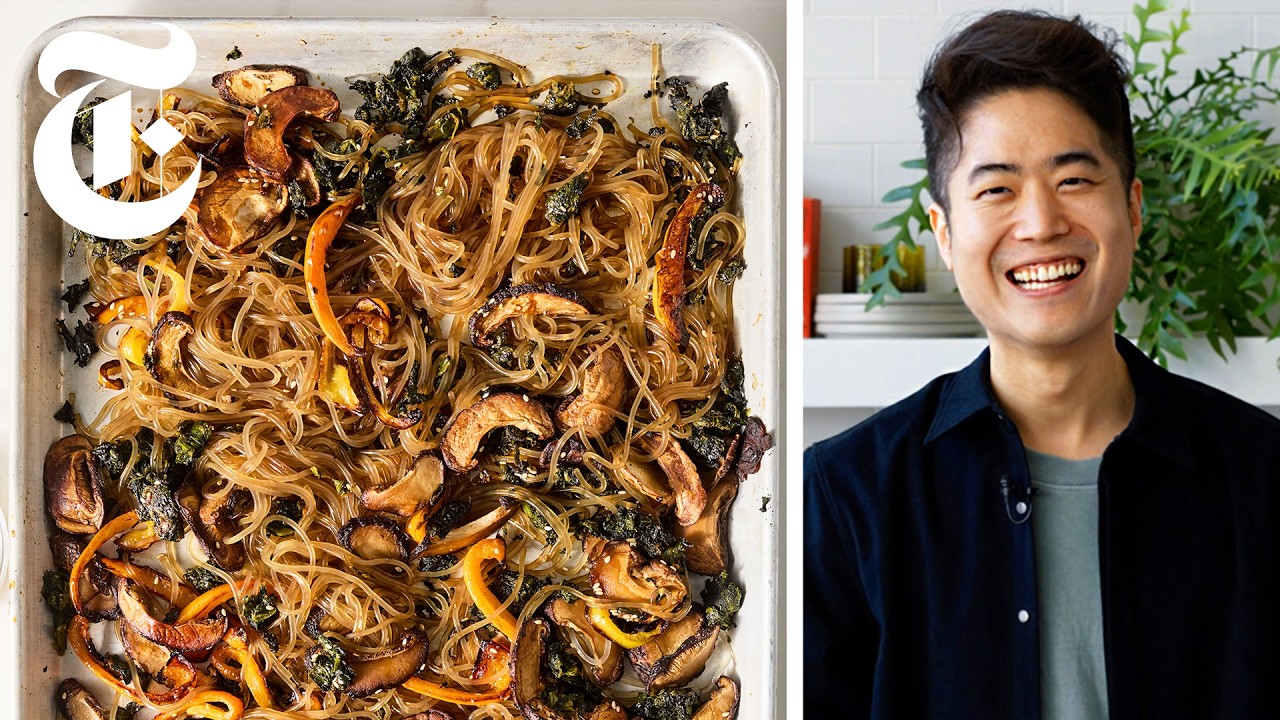
going to show you how to make My sheet pan japchae. Japchae is traditionally
a lot of work. It’s a kaleidoscope
of flavors. The sheet pan method helps you
arrive at that, just with way Less work. Historically, this dish
was eaten by kings. You don’t have to be
a king to have that. If I weren’t talking at all,
this would probably take me, I don’t know, 5-10 minutes. The idea is that
you are just using Whatever vegetables you have. How do you cut your pepper? Everyone cuts it
so differently. I just lop off the
top and the bottom, And I’m just going to
thinly slice these. You know when you’re
like — oh my god, yes. O.K., this is my favorite. When a bell pepper has
a little baby in it, It’s always the chef’s treat. Eat the baby. So I lobbed off the
top and the bottom. You can take off some
of the pepper’s rib. I’m cutting strips. You want kind of long strips. It doesn’t really matter how
you arrange the vegetables
On the pan, but do keep
in mind that the outside Of the sheet pan gets
the hottest heat. What I think I will do is
try to center the mushrooms. They kind of shrink a lot. I really do love thin slices. I know that I want the
bell peppers to caramelize Even more than the mushrooms. So what I think I’m going to
do is create a ring around The mushrooms. I appreciate the colors here. They’re very natural, and
they feel really beautiful. The spinach is also really
lovely in this recipe Because as you toss the
noodles with the roasted Frozen spinach, it latches
onto each noodle in a way That’s lovely. This has been thawed
overnight, actually. This is really satisfying. I’m just going to show. I love doing this.” “Sorry. I’m putting this at the edge
because I want the spinach To caramelize. So, in my kitchen, the main
oil that I really use to cook Is a regular olive oil. I like the flavor it brings. Salt and pepper
— you know this. You know the drill. You could actually just put
it in the oven like this, But I might zhuzh
on a little bit. Zhuzh. As the mushrooms cook, they’re
going to release some of this Oil, and then it’ll cook
in its own mushroomy oil. Stir frying is
great, but it can Be really hard to get
watery vegetables like this
To truly caramelize and
get that fire flavor. By roasting, you’re already
off to a good start. You’re going to get some
browning pretty easily, And you’re going to have this
deeper flavor that will carry The dish a long way. The water’s going. While this comes to a boil,
I’m going to talk about The sauce. Starts with a little garlic. I’m going to do
a couple cloves. This sauce — I don’t know. It’s just my japchae sauce. As you get older
and as you cook A certain dish more
and more, you just Have your golden ratios. My golden ratio happens to
have two tablespoons of soy Sauce plus one teaspoon. After you mix the
noodles with this sauce, You can adjust according
to your preferences. This is the salty savoriness. There’s a little sweetness
in the form of brown sugar And a little maple syrup. These are some sesame seeds
that have been toasted. It tastes like home. It’s so good. Ooh, those are great. Look how brown
those mushrooms are. Ooh, and the spinach
is really reduced. See how much the
mushrooms shrank? As this pan cools, these are
going to become chip-like. O.K., let’s talk
about the noodles. These are noodles made
from sweet potato starch. I need about six
ounces of noodles.
They expand considerably,
and they come like this. They’re really —
what’s that sound? It’s very plasticky. They’re hard. They’re dried noodles,
but it’s incredible. When you boil them, they
slacken, they turn slippery, They turn translucent a little
bit, and they’re really chewy. And they need to cook not
for very long, to be honest. You want to make sure
you’re really coaxing it Into the water and stirring. Ooh, do you see that? It’s so cool. Oh, these look kind
of close to done. I don’t want to
overcook these. Go by look. This is a big pot
of boiling water. These are going
to cook instantly. I love that chewiness, but
you still hear a crunch. These noodles aren’t
getting stir fried. I need these to be the way I
want to eat them because I’m Actually putting it
directly onto the sheet pan. Just put them
straight on the pan. So I’m actually going to go
ahead and chop these noodles Right here, like this. You do want to chop up the
noodles so that they are Easier to mix and they’re
kind of easier to eat. The sauce goes straight
onto the noodles. And then we’re
just going to toss. This is where you
can adjust seasoning. Salt and soy, they
do different things. Salt helps accent and pick
up the other ingredients. Soy adds umami and those
lovely brown flavors. This is japchae. It’s a sheet pan japchae,
no effort on your part.
Even the vegetables
don’t take long to roast. They take, like, 20 minutes. And the mushrooms are so good. These little
spinach clusters — Have you ever had that before? Lovely. [LAUGHS]: With
little jammy kind Of moments of relief
from the pepper. I think part of growing
up is understanding The way the world
works a little better. As an adult, I understand how
much labor goes into japchae Usually, so whenever I have
this much in front of me, I feel really rich. I feel like a king. I love japchae, and I
hope you love this too.”

Have you ever wondered why most of the Vinaigrettes in the grocery store are made with 10, 20, sometimes even almost 30 ingredients? I remember growing up in Provence watching my mother whipping vinaigrettes before every single dinner. She would mix in a giant bowl, delicious extra virgin olive oil, a robust aged vinegar (the flavor would depend on the main dish), sea salt and pepper and voila! I decided to do the same thing for my family and friends more than 20 years ago here in this beautiful country. And Provence Kitchen® was born. Stay tune for more articles and wonderful family recipes..

Leave a Reply