

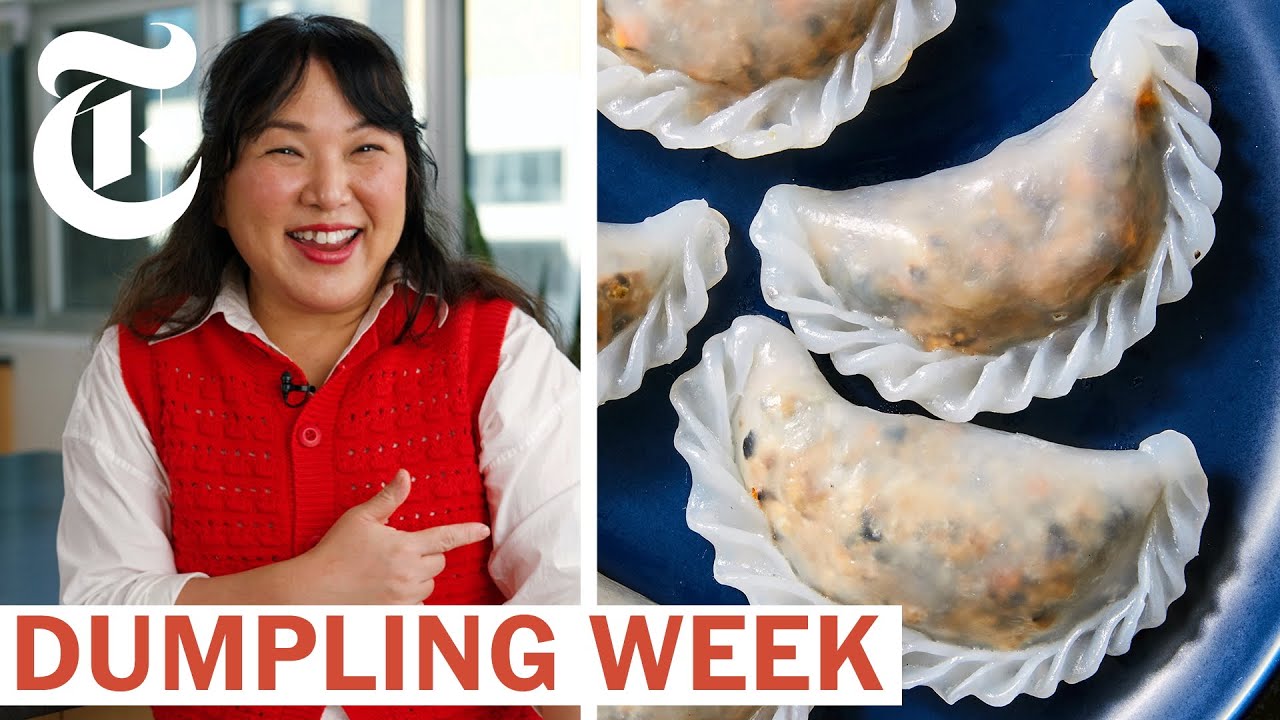
“Oh, fresh ink. Yes, it’s a tattoo from a
photo of my mom’s hands making Gok jai dumplings. I actually haven’t
shown my mom this. So I’m probably going
to get in trouble.” [MUSIC PLAYING] “Hi, I’m Hetty Lui McKinnon. And I’m a cookbook
author and food writer. And welcome to Dumpling Week. I chose gok jai dumplings, one
of the most treasured recipes In my family. These particular
gok jai dumplings Are from Zhongshan,
which is where Both my parents are from. I grew up in Australia,
as you can probably tell. It’s the first recipe my
mom ever wrote down for me. Some people might know gok jai
as a very different dumpling. In Zhongshan, it’s a savory
dumpling in a translucent skin That’s steamed. It can feel a little
bit intimidating to do. But the more you make them,
the better you’ll get. Even if they’re
not the prettiest, They’ll still taste good. You’re not losing if you
make a dumpling, ever. So for the filling, we’ve got
some celery, got some carrots. We’re going to put our
rehydrated, drained, And squeezed out mushrooms
and wood ear fungus in there. Water chestnuts, some zha
cai, which is pickled mustard Stems. And that’s going to add
some nice saltiness. Some extra firm tofu. So we’re going to put that in,
and we’re just going to pulse. Do not purée. You can actually chop
by hand, if you want.
But the food processor just
makes it so much faster. We want nicely chopped pieces,
but not pulverized or puréed.” [MUSIC PLAYING] “So we’re going to heat up
a large skillet or fry pan, Add a little bit of oil, and
then throw all of your filling In. Add some sugar. This is a little
trick from my mom. The sugar stops the mushrooms
and the wood ear fungus From just absorbing
all the saltiness Of the soy sauce, which is
going to be added in later. So we’re going to cook that
for three to five minutes, Just until the vegetables
soften and the mushrooms are Cooked. Once the soy sauce is in,
we’re going to turn off The heat. And we season with
salt and white pepper. And we want this mixture
to be quite flavorsome Because the
wrapper is actually Completely neutral in flavor. So we want to season
appropriately. So I recommend
tasting and adding More if you feel like it. Now, what the corn starch does
is it just absorbs any excess Moisture because we don’t
want the filling to be saucy. We want it to be quite dry.” [MUSIC PLAYING] “The next thing we’re going
to do is make the dough. In a big pot, you’re going
to add your wheat starch, Your tapioca starch,
and your potato starch. Get your boiling water, and
you’re going to pour that In right on top of the starch
because we need the heat To cook the starch. I love to use chopsticks
because it gives you
Maximum maneuverability. You’re just going to
stir the boiling water Into the starches. You don’t have to get
it completely mixed in. You’re still going
to see some dry bits. And then you’re going to
put the lid on, and we let The starches steam
for 10 minutes. And the steam time
is really important. That boiling water is
going to cook the starches And make it easy
to roll later on. The dough is still very hot. So if you want, you
can wear some gloves. I usually don’t because
I’ve got asbestos hands, And I’m used to high heat. But we’re going to bring the
dough together in the pot with Your hands until there’s
no more dry bits. Then we’re going to
put a little bit of oil On your countertop. And then you’re going to knead
that dough for 10 minutes. The kneading is really
important because it means That when you steam the dough,
it’s not going to crack. You need to get
that elasticity in. And you’ll understand it once
you eat them because these Dumplings are really bouncy. It’s a beautiful,
rich white dough. It’s almost like snow. So for the dough, you’re going
to divide that into six equal Pieces, if you can. And you can use scales to
weigh them, if you like. I usually just eyeball it. Place them on a
sheet pan or a plate, And then cover them
in a wet cloth. So we’re going to work with
one piece of dough at a time. We’re going to roll that into
a log that’s about 1 and 1/2
Inches in thickness. And then we’re going to cut
that into 1-inch pieces. So you should be able to get
between seven, eight, or nine Pieces out of each log. Working with these
1-inch pieces, We’re going to roll
them into a ball. And then we’re going to roll
them out into a wrapper that Is about 3 and 1/2
inches in diameter. We can either
roll them by hand By just pressing them out. I like to use a
tortilla press, which Is how my mom makes these. That’s what she
uses in her house. A tortilla press makes
really quick work Of the task of rolling. So then we’re going
to add our filling. I like to use
about 2 teaspoons. You can use more or less. If you’re new to
dumpling making, I always say use less filling. And as you get more
confident rolling, add more. Fold the dumpling over, and
then we’re going to seal The edge. Now, this dumpling is
quite a tacky dough. So you don’t need any water. We’re just going to press them
together all the way around. So you almost create
a border for yourself. Then we’re going
to crimp them. You basically use your
thumb and your index finger. They’re doing your hard work. And you’re going to press
down with your thumb to create A little bit of a pleat. And then we’re going to keep
working all the way around. It’s quite hard to explain,
but lucky you have this
Video.” [MUSIC PLAYING] “Then once you’re done,
we move on to steaming. I use bamboo steamers. You can really steam
them in many layers. Line the steamers with
either parchment paper Or some silicone liners. You can also use Napa cabbage
or something like that. Put the dumplings on the
top, not touching if you can. A wok is great because the
large size bamboo steamer kind Of fits perfectly in there. The water actually
steams off really fast. So every few minutes, I
would be adding more water To the wok. Before they’re ready, they’re
going to be very still quite White. But once they’re ready, you’re
going to start seeing a little Bit of translucency. As they sit and cool, they’re
going to become much more Translucent. And you’re going to see the
filling through the wrapper. So they’re very,
very beautiful.” [MUSIC PLAYING] “These are my family’s
gok jai dumplings. I don’t eat these
with any sauce. But if you wanted
a sauce, you could Go chili crisp or something. All right. The big tasting. The dough is so bouncy. It’s so chewy. It’s the most
satisfying dumpling. I feel like when you’re
making a recipe that belongs To your family, it
doesn’t belong to me.
It belongs to my ancestors. And so I want to make it
as true to the way they Would have made it as I can. From my family to
yours, I hope you really Enjoy making these. I hope you try them. I hope you love them. And I hope you love sharing
them with your friends. And Happy Lunar New Year. If you’re looking for this
recipe or any of the dumpling Recipes, you can get it over
at ‘NYT Cooking.’ I could eat All of these in
about five seconds. That’s why you need
to make 48 of them.” [GIGGLES] [MUSIC PLAYING]

Have you ever wondered why most of the Vinaigrettes in the grocery store are made with 10, 20, sometimes even almost 30 ingredients? I remember growing up in Provence watching my mother whipping vinaigrettes before every single dinner. She would mix in a giant bowl, delicious extra virgin olive oil, a robust aged vinegar (the flavor would depend on the main dish), sea salt and pepper and voila! I decided to do the same thing for my family and friends more than 20 years ago here in this beautiful country. And Provence Kitchen® was born. Stay tune for more articles and wonderful family recipes..

Leave a Reply