

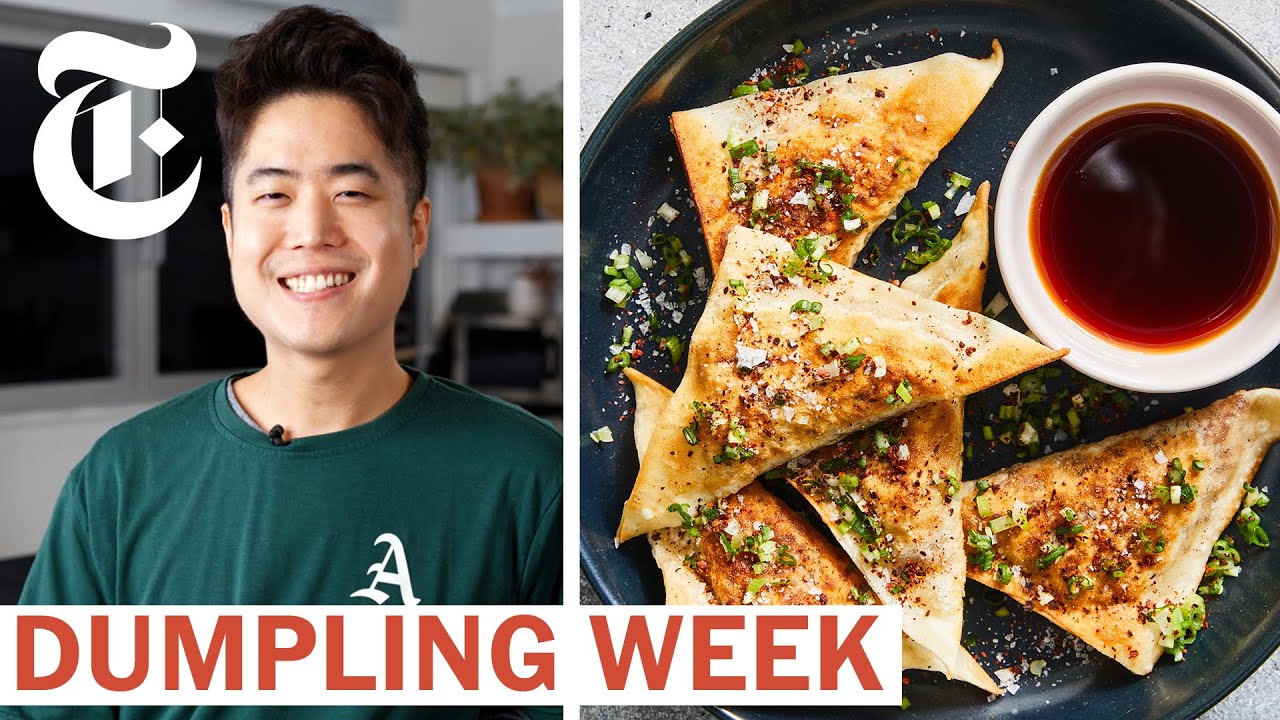
“Hi. I’m Eric Kim.” “I’m a cooking columnist
for ‘The New York Times.’” [MUSIC PLAYING] “Hey. It’s Eric Kim. I’m a cooking columnist for
‘The New York Times.’ And it’s Dumpling week. I wanted to share a very
specific type called Napjak mandu. And that means flat dumplings. They have less filling
than a regular dumpling Because the point of these
is the crispy wrapper. It’s a classic of the
city, Daegu in South Korea. In my family, my
mom’s the main cook. She is the one who makes the
filling and makes the stock. And then she calls my
brother, my dad, and me down. And we help her
fold the dumplings. It’s not really a thing that
you want to do by yourself, Folding all those dumplings. It’s a fun way for all
of us to be involved. But also, we grew
up understanding The value of that dumpling. There’s something about the
makeup of my mom’s history And my dad’s history that
resulted in kimchi mandu. It’s always been our
family’s favorite. The irony of
dumplings is that it Might take a couple of hours
to fold 50 or 60 dumplings, But you can eat
them in 30 seconds. I like this sauce because it’s
just such a simple iteration Of that familiar
dipping sauce. That ratio of salt, sweet,
sharp, it really is up to you. And sometimes we
would even build The sauce in our own
little dishes at the table.
So the mandu part
of this recipe Starts with boiling dangmyeon. Dangmyeon are those really
lovely sweet potato noodles That you would find in
dishes like japchae. It’s also a classic filler
of any Korean mandu. You’ll notice that they’re
pretty sticky, which is good. You want that. You don’t want to undercook
these because it’s Their fluffiness, their
softness that really soaks up So many of those seasonings. Chop them up as
finely as you can. The kimchi is the
main flavoring here, So you do want to
try to find or use A really nicely ripened
kimchi because so much Natural flavor comes from that
fermented cabbage product. You want to drain your
kimchi before you finely Chop that as well and add it. I decided on really bulking
up on the scallions. I think classically, you
would use garlic chives. But I think scallions give
you that soft sweetness. I think that’s really
lovely with the noodles. You want to fortify the
flavors that are already there Without adding too much water. And the way to do that is by
adding gochugaru, which is A Korean red pepper powder. A little soy sauce
is going to bring out Those savory notes even more. But a little salt
and sugar just Really amps up those flavors. So you really season to taste. Take a bite of that
filling before you fill All your dumpling wrappers. You want to make sure it’s
pretty assertively seasoned. And the last note is
toasted sesame oil.
A little bit of it
finished the filling. It glossed it up a teeny bit. It adds a little fat. It also rounds out the flavors
and makes them feel so full. There’s no wrong
way to do this, But I have a certain process
that works for me personally In my brain. I take one wonton skin. I put it in front of me. I have a 2 teaspoon
ice cream scoop at home That I like to use. You can scoop that
very sticky filling And just plop it into the
center of that wrapper. I take my five little
fingers, and I dunk the tips Into a small bowl of water. One finger at a time, I
gently glide along each edge While switching fingers. One finger dip gets
you about one edge. And then your finger
will be dry after that. After I wet each edge, I take
one corner of the wrapper. And I fold it over the
filling to create a triangle. It’s an isosceles triangle, I
think, because this is longer. It’s a squared plus b
squared equals c squared. So that’s what you’re making. Anyway –” “After you do that,
I take two fingers, And I really press around
the filling over the skin To squeeze air from the inside
out while sealing the edges Because the one thing that you
really don’t want to happen When you boil these is
you don’t want the filling To puncture out. At this stage, you can
freeze the dumplings. And you can have dumplings
whenever you want. You could stop after
the boiling step
And just enjoy them
as boiled dumplings. That’s really
delicious as well. You have a lot of options. You can give up at any step,
and you’ll have something Really delicious. That’s my point. So the next step, I like to
use that same water that you Use to boil the dangmyeon. And then one thing that
I think is really helpful Is you create a whirlpool. Just swirl your spoon
or spatula in that pot So that it creates
some motion. And that’s when I add
about five to six, Seven dumplings because if
you were to just plop them In, they can stick
to the bottom. And that’s really not great. So you just boil the dumplings
for about two minutes. They don’t take long. The matte
dumpling wrapper Becomes a little glossier. And that bright red
kimchi noodle filling Will show through that
translucent wrapper A little more. And so the dumplings will
literally become more red. There’s a trick that I do to
really get that moisture off Of them before we fry them. This is a trick I got from
my Aunt Georgia, actually. The microwave, it
finishes steaming them. And it pushes any excess water
or air out of the filling. If you don’t have a microwave,
you can actually just drain Them on a paper towel. It’s not a big deal. After that, all you
do is you fry them. I like to take a
nonstick skillet,
Put it over medium heat,
add a little bit of oil. You actually don’t even
need that much oil for this. You’re just crisping
them up in the pan. You get a nice
light golden color. It’s a really thin,
shattering kind of crisp. You want your teeth to
sink into that plush noodle And the lovely kimchi. And it’s a really lovely
textural experience. You have all the textures. You get a sprinkling of
gochugaru and sometimes Scallion. And then the
sauce that we made In the beginning,
that will usually Be poured over it, actually. I like to use it
as a dipping sauce Because if you are
making this for a party, Those crispy triangles are
really great to pass around. There’s so much flavor here
for so few ingredients. It’s about the sum of
everything like the scallion On top, the gochugaru. It’s so special and
interesting and fun to eat. I think with this
recipe, it felt Really good to lean
into what my family does And what my mother
did for us growing up, And the flavors that really
mean Seollal and Lunar New Year to me. And that final
bite with the crisp And the yielding to
the softness, that is The flavor of Korean cooking. And I’m crying because
I don’t know why. But I love — I think whenever I
develop a Korean recipe, There’s just so much
pressure to get it right. And I think after four
years at this job,
I just want to show people
that you don’t need much To have a really joyful
dish, a celebratory dish that Sometimes can’t really be
finished without the help Of your family. This week, you’ll have five
dumplings to choose from. I hope you’ll make all five. This is mine, my
kimchi napjak mandu. It’s heaven on a
plate, I think. And I hope you love it. You can find this recipe and
many more at nytcooking.com. I like yours. Those are cool. Those look — sorry. Yours look great too.” [MUSIC PLAYING]

Have you ever wondered why most of the Vinaigrettes in the grocery store are made with 10, 20, sometimes even almost 30 ingredients? I remember growing up in Provence watching my mother whipping vinaigrettes before every single dinner. She would mix in a giant bowl, delicious extra virgin olive oil, a robust aged vinegar (the flavor would depend on the main dish), sea salt and pepper and voila! I decided to do the same thing for my family and friends more than 20 years ago here in this beautiful country. And Provence Kitchen® was born. Stay tune for more articles and wonderful family recipes..

Leave a Reply